Implementing Custom Remote Call Handlers for Content Synchronization in Distributed Casino Review Setups
Written by Carlo Neumann · Jul 13, 2026

Implementing Custom Remote Call Handlers for Content Synchronization in Distributed Casino Review Setups
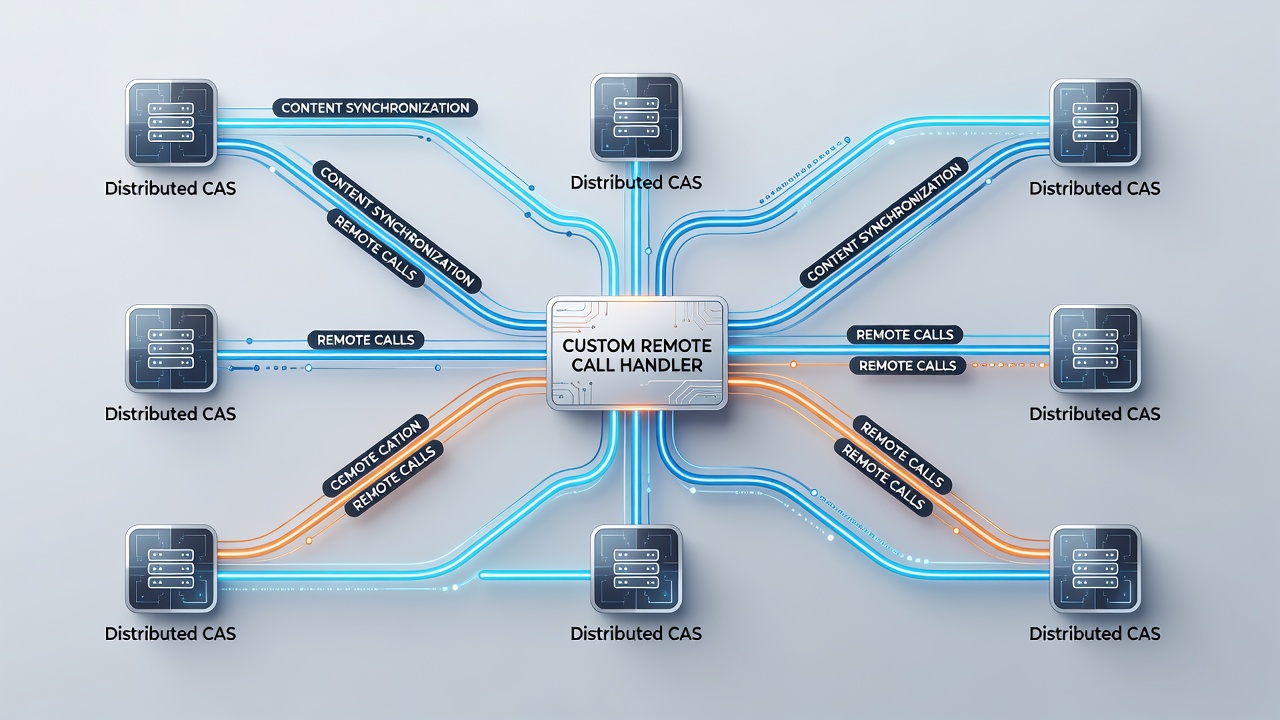
Distributed casino review installations often operate across separate servers and geographic locations, which creates challenges for keeping content consistent without manual intervention. Custom remote call handlers address this by managing targeted data exchanges between sites while avoiding reliance on standard protocols that many installations already restrict. Observers note that these handlers allow developers to define precise functions for pulling or pushing updates such as review ratings, operator details, and promotional information.
Core Components of Custom Handlers
Each handler typically consists of a listener script that receives encrypted requests, validates the source through token checks, and executes predefined actions on the local database. The process begins when one installation triggers a call to another, passing structured parameters that specify the type of content to synchronize and the expected response format. Research from distributed systems studies shows that such modular designs reduce latency compared with broad synchronization methods because only relevant data travels across the connection.
Authentication layers form an essential part of the architecture, where each request carries a signed payload that the receiving end verifies against a shared registry of approved endpoints. This setup prevents unauthorized access while permitting legitimate exchanges between partner sites that share review databases. In practice, teams configure these layers using asymmetric keys so that even if one installation faces compromise, the others remain protected through isolated verification routines.
Deployment Steps Across Multiple Sites
Developers start by mapping the data fields that require synchronization, which might include review scores, author metadata, and timestamp records. They then code the handler functions in a language supported by the underlying platform, ensuring each function handles error conditions gracefully and logs activity for later audits. Testing occurs first in isolated environments before rolling out to production nodes, where gradual activation lets administrators monitor traffic patterns and adjust thresholds for acceptable call volumes.
Integration with existing content management systems occurs through hooks that fire after local content changes, prompting the handler to notify connected installations. This event-driven approach keeps data fresh without constant polling, which conserves server resources. Figures from industry reports on multi-site operations reveal that organizations adopting similar patterns achieve synchronization intervals measured in minutes rather than hours.
Security and Compliance Factors
Regulatory requirements in various jurisdictions demand that any remote data movement includes audit trails and encryption standards that meet current guidelines. Custom handlers incorporate these elements by routing calls through secure channels and recording each transaction wth details such as origin, timestamp, and payload size. The New Jersey Division of Gaming Enforcement has published technical expectations for systems that handle gaming-related information, and developers align their implementations with those benchmarks to maintain operational approval.
Rate limiting and access whitelisting further strengthen the setup, allowing only verified installations to initiate calls during defined windows. When anomalies appear, such as repeated failed authentication attempts, the handler can trigger alerts or temporarily block further requests from the offending source. This layered defense supports compliance efforts while preserving the ability to exchange timely updates across the network.
Operational Examples from the Field
One network of review sites implemented handlers that synchronize user-submitted ratings every fifteen minutes during peak traffic periods. The system identifies changes at the source installation and queues targeted calls to partner nodes, which apply the updates after confirming data integrity through checksum verification. Administrators report that this method eliminated the discrepancies that previously appeared when sites operated independently.
Another deployment focused on promotional content, where handlers push new bonus listings and terms from a central editorial hub to regional installations. The configuration includes conditional logic so that only promotions relevant to a particular market reach the corresponding sites, reducing unnecessary data transfer. Data collected through July 2026 showed consistent performance across these exchanges, with average completion times remaining under two seconds per call during normal load.
Maintenance and Scaling Considerations
Regular reviews of handler code ensure compatibility with platform updates and evolving security standards. Teams maintain version control for each handler script and document changes so that all connected sites apply updates in coordinated releases. When the number of installations grows, load balancers distribute incoming calls across multiple listener instances to prevent bottlenecks at any single point.
Monitoring tools track metrics such as call success rates and average response times, providing early warnings when patterns deviate from established baselines. These insights guide adjustments to timeout settings or payload limits, keeping the synchronization process reliable as traffic volumes increase. Academic papers on distributed content systems indicate that proactive metric collection correlates with fewer outages in production environments.
Conclusion
Custom remote call handlers deliver a focused method for maintaining consistency across distributed casino review installations by handling precise, authenticated exchanges. The approach integrates with existing platforms through defined hooks and supports compliance needs through built-in logging and encryption. As networks expand, the same modular structure scales by adding endpoints and refining call logic without requiring wholesale changes to underlying systems.