Coordinating Front Page Refreshes Through Encrypted Service Endpoints Across Distributed Review Ecosystems for Entertainment Venue Evaluations
Written by Taylor Krüger · Aug 22, 2026
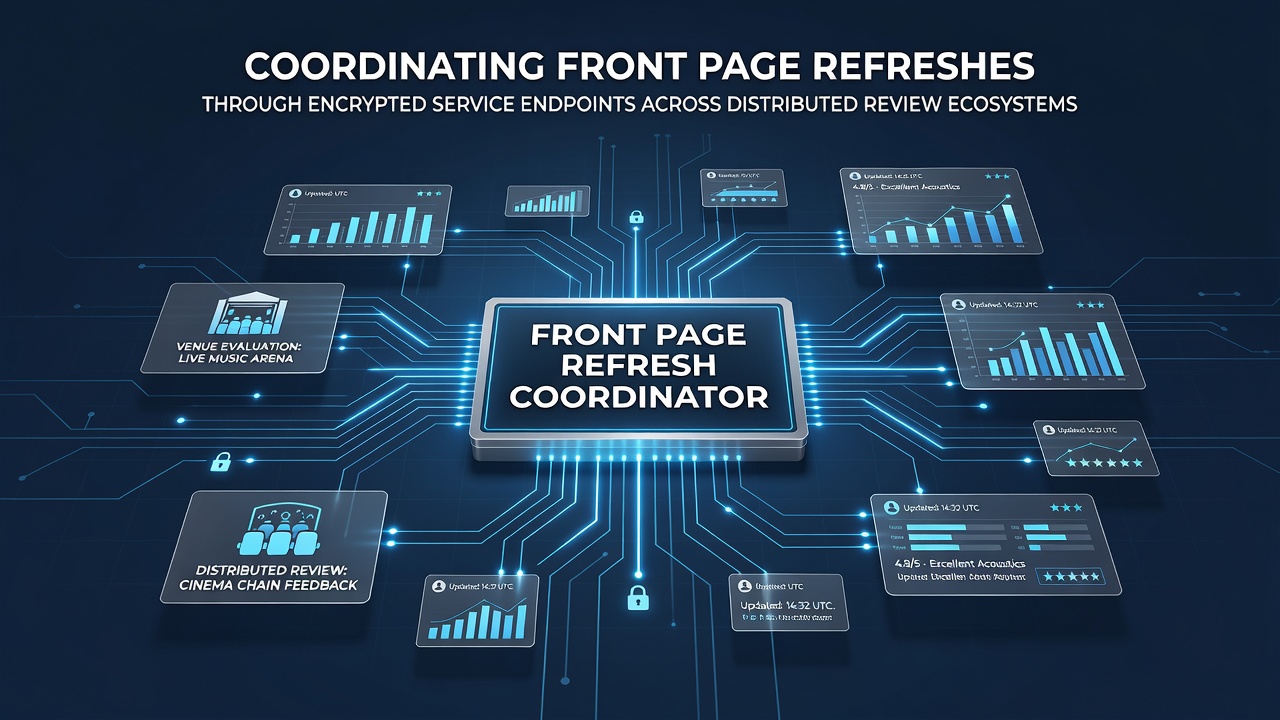
Coordinating Front Page Refreshes Through Encrypted Service Endpoints Across Distributed Review Ecosystems for Entertainment Venue Evaluations
Systems that manage front page content across multiple review platforms rely on encrypted service endpoints to synchronize updates in real time, and these setups support networks handling evaluations of entertainment venues such as casinos, theaters, and resorts. Data from industry reports shows that operators coordinate refreshes by routing requests through secure channels that use protocols like TLS 1.3, which encrypt payloads containing venue ratings, event schedules, and user feedback summaries before transmission between nodes.
Core Mechanisms of Endpoint Coordination
Encrypted endpoints function as gateways that validate incoming requests from distributed nodes, and authentication occurs through token-based exchanges that prevent unauthorized access while allowing approved systems to push changes to homepages. Researchers at technical institutes have documented how these endpoints process batches of updates, including new venue listings and score adjustments, by decrypting data only after verification steps complete at each receiving server. In practice, a central orchestration layer sends instructions to regional review sites, where the endpoints handle the actual content swaps without exposing raw evaluation data during transit.
Observers note that load balancing across these endpoints helps maintain performance when traffic spikes occur during peak evaluation periods, such as major venue launches or seasonal promotions. August 2026 saw several entertainment groups deploy additional endpoint clusters to manage increased query volumes from review aggregators tracking North American and Asian properties.
Architecture in Distributed Review Networks
Review ecosystems for entertainment venues typically span dozens of independent platforms that share data through standardized API contracts, and encrypted endpoints enforce consistency by requiring mutual certificate validation before any front page refresh executes. Each participating site maintains local caches that update only after the endpoint confirms successful decryption and integrity checks, which reduces the risk of displaying mismatched information across regions. Studies from distributed computing groups indicate that such architectures cut synchronization delays by routing traffic through geographically proximate endpoints rather than relying on single global servers.
One documented approach involves message queuing services that queue refresh commands until the target endpoint acknowledges receipt, and this method supports both scheduled updates and on-demand changes triggered by new venue evaluations. Platforms handling casino and resort reviews often integrate these queues with content management tools to automate the swap of featured sections without manual intervention at individual sites.
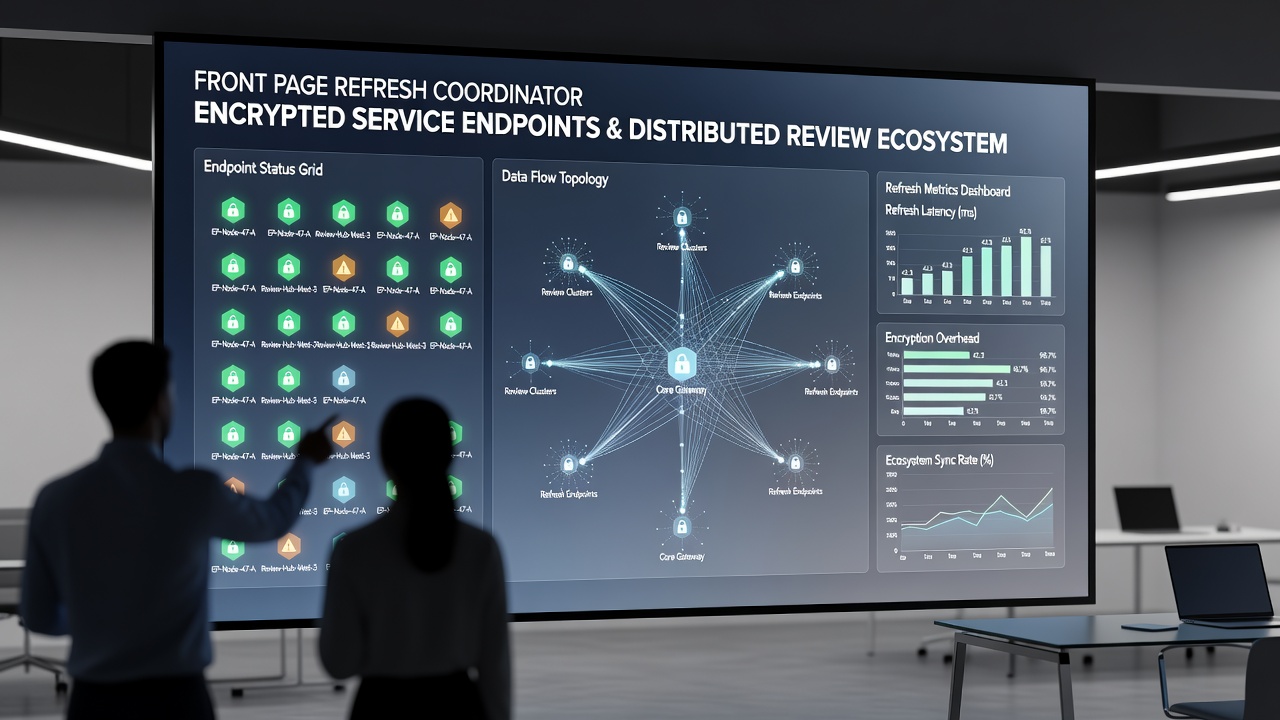
Security Protocols and Data Handling
Encryption standards applied at service endpoints include AES-256 for payload protection alongside elliptic curve cryptography for key exchanges, and these measures align with guidelines from organizations such as the National Institute of Standards and Technology. NIST publications on transport layer security outline requirements that many review networks adopt to safeguard evaluation data during distribution. Audit logs generated at each endpoint record the origin, timestamp, and hash of every refresh request, which allows administrators to trace content changes back to specific source systems.
Regional variations appear in how networks implement endpoint access controls, with some European platforms incorporating data minimization rules that limit the types of venue metrics shared across borders. Australian industry associations have published frameworks that recommend endpoint segmentation to isolate high-traffic review clusters from lower-volume nodes, thereby containing potential exposure during incidents.
Implementation Patterns Across Venue Categories
Networks focused on casino evaluations frequently combine endpoint coordination with scoring algorithms that recalculate aggregate ratings before pushing updated front page modules, and similar patterns appear in systems covering live entertainment venues. When a new review batch arrives, the orchestration service triggers encrypted calls that instruct endpoints to replace featured images, update star ratings, and refresh associated metadata in a single atomic operation. This coordinated approach ensures that visitors to any linked platform see consistent information about the same entertainment property.
Case examples from multi-site operators reveal that endpoint health monitoring runs continuous checks on certificate expiration and response latency, with automated failover routing traffic to backup endpoints when primary ones experience degradation. Such monitoring has proven effective during high-volume periods when multiple venues release simultaneous updates.
Conclusion
Encrypted service endpoints provide the technical foundation for synchronizing front page content across distributed review platforms that evaluate entertainment venues, and ongoing refinements in authentication and queuing methods continue to support larger networks. Figures from infrastructure reports show steady adoption of these coordination techniques as venue operators expand their digital presence, with emphasis on maintaining data integrity during every refresh cycle.